
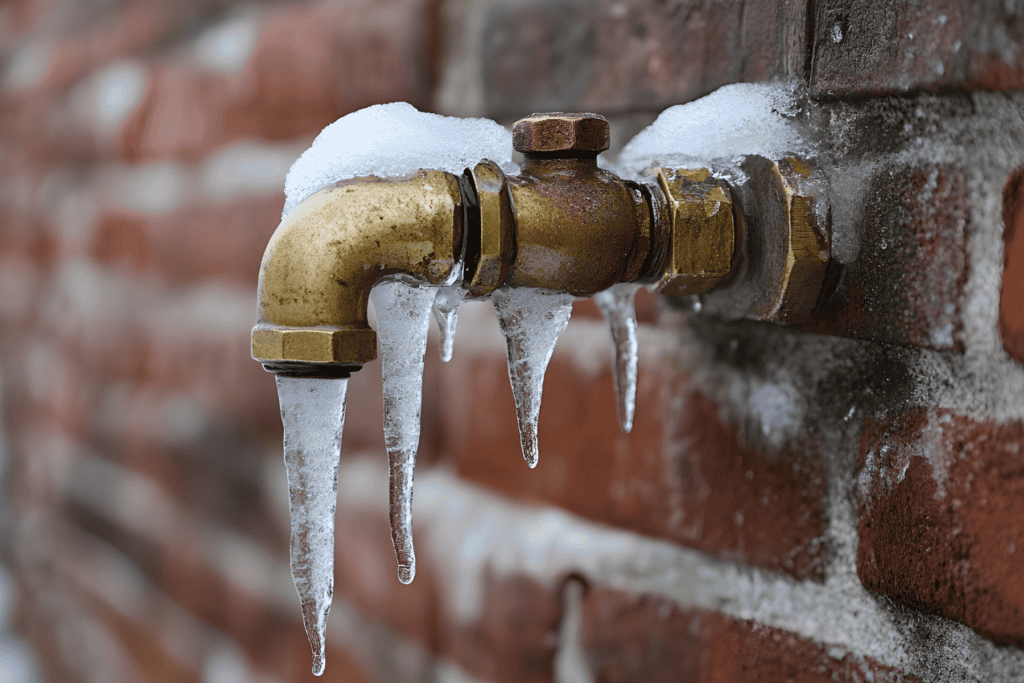
To winterize outdoor faucets, follow four basic steps. First, disconnect all garden hoses. Next, close the outdoor faucet shut-off valve inside the house. Then, open the outdoor faucet to drain standing water. Finally, open the bleeder cap on the indoor valve to clear the remaining water. Completing these steps before the first hard freeze keeps water out of the section of pipe most likely to crack.
Water expands when it freezes. When cold air reaches the pipe section inside an exterior wall, any remaining water can freeze, and that expansion can split copper, brass, or plastic pipe. The break usually happens inside the wall cavity. You might not notice the leak until the pipe thaws in spring. At that point, pressurized water can flood wall cavities and living spaces, requiring emergency frozen-pipe burst repair.
Exterior water fixtures go by various names, including spigots, hose bibs, and sillcocks. Regardless of the term, every exterior pipe penetration creates a thermal pathway into your plumbing system. Homeowners in Sterling, VA, can see hard freezes from late fall into early spring, so it’s worth taking care of this early. A few minutes with a bucket each fall is enough to winterize outdoor faucets and keep your lines intact all winter.
How to Winterize Outdoor Spigots and Standard Hose Bibs
Preparing standard exterior fixtures requires inspecting your basement, utility spaces, and exterior walls. Traditional compression bibs hold water right behind the outdoor handle. Because the valve seat sits outside the heated wall, these units freeze quickly if you don’t drain them. Follow these steps to winterize hose bibs and other standard outdoor faucets:
- Disconnect all hoses, splitters, and timers from the spigot. Shake out any trapped moisture before rolling up the hoses for winter storage.
- Locate the dedicated indoor shut-off valve. Builders usually install this valve along ceiling joists, in crawlspaces, or near your main service line.
- Turn the indoor valve handle clockwise until it stops. If it won’t turn, don’t force it, as an old valve can break or leak.
- Step outside and fully open the exterior faucet handle. Let all standing water drain out into the yard.
- Place a small bucket under the indoor shut-off valve. Unscrew the small brass bleeder cap on the valve body. This lets air into the line so the remaining water can drain out.
- Reinstall the bleeder cap finger-tight once water stops dripping. Leave the outdoor faucet handle open through the winter.
After these steps, the pipe running through the wall should be empty, and you can leave the faucet open until spring. If the bleeder cap keeps dripping after you close the valve, it isn’t sealing completely, and water can still reach the outdoor pipe. A valve that won’t close, keeps dripping, or shows heavy corrosion should be repaired or replaced by a plumber before freezing weather. If your home doesn’t have a shut-off valve for the outdoor faucet, a plumber can add one at the same time.
Winterizing a Frost-Free Spigot
A frost-free spigot, also called a frost-proof sillcock, has a long stem that puts the shut-off valve inside the heated part of the house. When it’s installed with a slight downward pitch toward the outside, the water left in the barrel drains out each time you turn the faucet off. That design lowers the risk of freezing, but it only works if the water can drain.
Many homeowners believe these fixtures require zero seasonal maintenance. However, leaving a garden hose connected defeats the engineered freeze protection. A connected hose traps residual water inside the horizontal brass barrel. As cold air penetrates the siding, that trapped water can freeze and split the pipe inside the wall.
To winterize a frost-free spigot, disconnect every hose, quick-connect fitting, and watering attachment before the first freeze. Then open the faucet briefly and close it again so any water in the barrel drains out. Unlike a standard faucet, a frost-free spigot stays closed for the winter because the valve inside the house keeps water out of the cold section of pipe.
Choosing Between Standard and Frost-Proof Faucets
Each fixture style presents clear trade-offs. Standard hose bibs are simple and easy for a plumber to repair. However, they demand strict seasonal draining and an accessible indoor shut-off valve. Frost-proof sillcocks remove the need for indoor bleeder caps during autumn. Frost-proof units must be installed at the right depth and with a steady downward slope to work correctly. If you’d rather not drain lines every fall, a plumber can replace standard faucets with frost-free models.
Additional Cold Protection and Managing Frozen Lines
Properly draining lines is the primary defense against freeze damage, but additional steps help protect exposed plumbing runs. Air leaks around rim joists and foundation walls permit freezing drafts to reach indoor piping. Insulating exposed pipe and sealing drafts adds another layer of protection.
Insulation and Exterior Covers
An insulated foam faucet cover adds an extra thermal barrier against wind chill. These covers hook over the faucet handle and cinch firmly against the exterior siding. They stop subfreezing drafts from moving through the siding penetration around the pipe. They take only a minute to put on.
Inspect any supply lines that route through unconditioned spaces like crawlspaces, attics, or exterior cantilevers. Wrap these pipes with pre-slit, closed-cell polyethylene foam insulation tubes. Tape the seams tightly with foil or insulation tape. Before insulating, seal gaps where the pipe penetrates the band joist using expanding polyurethane foam or exterior-grade silicone caulk. These extra steps keep heat around the pipe when you winterize outdoor faucets.
How to Safely Handle a Frozen Outdoor Faucet
If you turn on an exterior spigot and no water flows, the line may be frozen. Never use an open flame, propane torch, or heat gun to thaw a frozen pipe. Extreme heat can flash-boil trapped water, burst the metal pipe, or ignite wood framing.
Instead, close the water shut-off valve to that fixture immediately. Keep the outdoor spigot handle open so melting water and steam can escape. Apply gentle warmth along the pipe with a hair dryer on a medium setting, starting at the faucet end and working inward, and keep the dryer away from any standing water. You can also wrap the frozen section with hot-water-soaked towels. If you notice split seams, bulges, or frost on the pipe surface, leave the water turned off and contact a technician for professional frozen pipe repair.
Spring Inspections and Repair Decisions for Sterling Plumbing
Seasonal preparation wraps up when you inspect the system during the spring thaw. Identifying minor problems early prevents structural water damage inside your walls.
Testing for Leaks After Winter
When you restore water in spring, check carefully for leaks before using the spigot. Have a second person watch the indoor pipe run while you turn the shut-off valve back on. Look for damp drywall, active dripping, or water hissing behind the wallboard. An outdoor faucet leaking inside the house often isn’t obvious until you turn the water back on, so check again after the first few uses.
When to Call a Plumber
Call a plumber if your home has no indoor shut-off valve for the outdoor faucet, the valve won’t turn or won’t close completely, or the faucet keeps dripping after you turn it off. Signs of freeze damage, such as water inside the wall or weak flow at the spigot, also require a professional, since repairs usually mean opening the wall and replacing the damaged section of pipe.
If your inspection reveals damaged supply lines, book a plumbing repair appointment promptly to protect your home. Homeowners updating older fixtures can plan a new plumbing installation or arrange a comprehensive inspection to check valves throughout the house. For larger projects, such as replacing several faucets or adding shut-off valves, our plumbing services cover the full job.
Protect Your Exterior Plumbing with John Nugent & Sons
Winterizing outdoor faucets prevents unexpected pipe breaks and water damage. John Nugent & Sons has provided heating, cooling, and plumbing service since 1975. Our team can replace a damaged shut-off valve, install a frost-free spigot, or repair freeze damage, and same-day service is available. If you need a plumber in Sterling, VA, contact us today to schedule service before freezing temperatures arrive.