
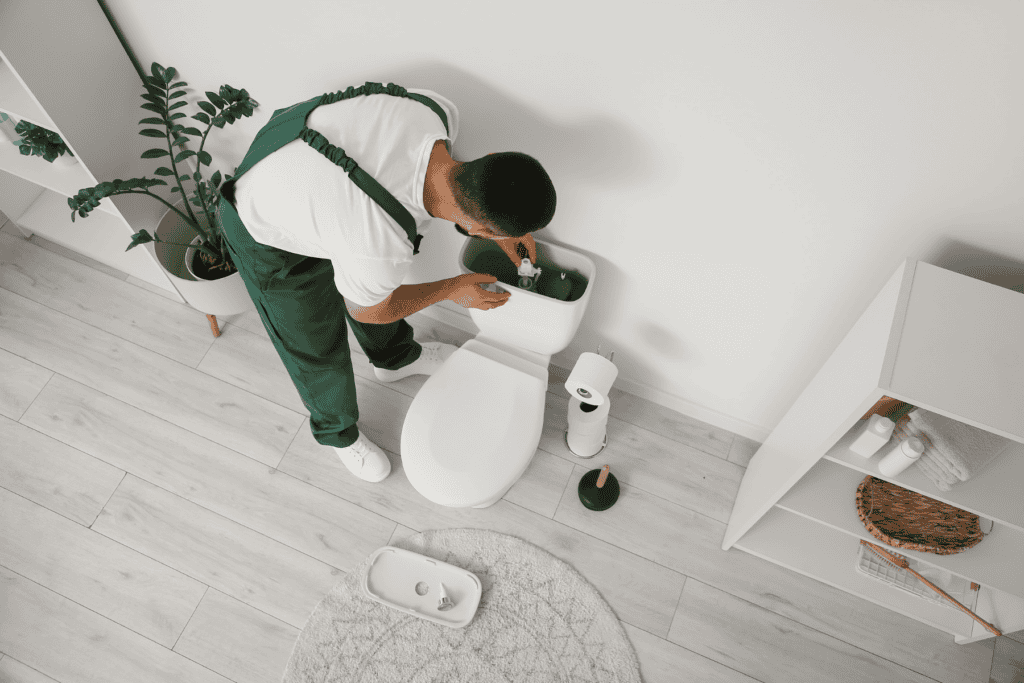
When you find your toilet tank not filling after a flush, the issue usually stems from a disrupted water supply or a malfunctioning fill valve. Common culprits include a partially closed shutoff valve, a worn or clogged fill valve assembly, or a float that is stuck against the porcelain wall. Addressing these components directly restores proper water flow and helps your toilet work reliably every day.
Understanding how your tank mechanisms work together can save time and help you decide when a routine adjustment is enough. This guide outlines the most frequent mechanical failures, clear troubleshooting steps, and the critical signs that indicate a need for professional plumbing services. Homeowners in Sterling, VA, and nearby communities can use this walkthrough to safely inspect basic tank hardware before contacting an experienced technician.
Common Reasons for Tank Refill Problems
A toilet relies on balanced water pressure and coordinated internal components to refill the reservoir cleanly after every flush. When any part in this mechanical loop degrades or shifts, you may experience a toilet tank not filling after a normal flush. Homeowners frequently ask, “Why is my toilet tank not filling properly when the rest of the bathroom seems fine?”
Shutoff Valve and Supply Line Restrictions
The shutoff valve located on the wall directly behind your toilet controls the main flow of incoming water. If someone bumped this oval handle during routine cleaning or minor repairs, it might be partially closed and restrict incoming water. A sharply kinked flexible supply line or a sediment blockage can also prevent water from reaching the tank base.
Fill Valve Failures and Mineral Accumulation
Inside the reservoir, the fill valve regulates water entering from the main supply line. A toilet fill valve not working properly often suffers from internal wear, degraded rubber gaskets, or lodged sediment that blocks the intake aperture. When internal components lose their seal or fail to open under pressure, the entire toilet won’t fill as intended.
Hard water adds another layer of trouble over years of normal use. Dissolved calcium and magnesium gradually build up inside the fill mechanism’s small channels, creating stubborn scale that restricts water flow. Investing in a whole-home water softener system helps protect your delicate plumbing valves from premature mineral encrustation and persistent wear.
Float Complications and Flapper Leaks
A toilet float controls when the fill valve opens and shuts by rising alongside the incoming water level. If the float arm is set too low or catches on the porcelain tank wall, the valve shuts off before enough water enters. In other situations, a worn flapper fails to create a watertight seal against the flush valve drain, allowing fresh water to escape into the bowl as quickly as it enters.
Low Pressure and Upstream Plumbing Disruptions
Sometimes the root cause of a toilet not filling with water lies entirely outside the bathroom. Municipal water main repairs, localized pressure drops, or work performed on adjacent water lines can temporarily interrupt normal residential pressure. These external events often dislodge pipe scale and loose grit that travel directly toward your toilet’s narrow inlet screens.
Because many mechanical failures produce identical symptoms, pinpointing the exact cause requires careful inspection. If simple visual checks do not reveal an obvious obstruction, a licensed plumber in Sterling, VA, should evaluate the system to prevent ongoing water waste.
Toilet Tank Filling Slowly vs. Not Filling at All
Distinguishing between a complete lack of water and a sluggish refill cycle helps you quickly narrow down the mechanical culprit. Both issues disrupt your routine, but they point toward different types of mechanical blockages or pressure limitations. Watching how the reservoir behaves right after a flush can reveal whether the supply or the internal valve needs attention.
Identifying Why a Tank Fills Slowly
When you notice your toilet tank filling slowly, water is still moving through the plumbing, but an obstruction restricts its total volume. A toilet tank slow to fill typically points to a partially shut stop valve, mineral buildup narrowing the fill valve orifices, or a pinched supply hose. In some cases, localized sediment trapped in the inlet screen reduces water flow without blocking it entirely.
Reduced water pressure throughout the property can also slow refills across multiple bathrooms. Our guide to addressing low water pressure covers the most common whole-home causes. If older piping or incoming water line issues reduce home pressure, every connected appliance will take much longer to refill. Diagnosing whole-home pressure issues early helps prevent widespread distribution problems across your entire plumbing network.
What a Complete Refill Failure Indicates
A toilet not filling at all signals a complete barrier somewhere between the wall supply pipe and the discharge tube. This abrupt stoppage often happens when an aged fill valve diaphragm ruptures, a float stays jammed in the fully raised position, or the shutoff valve fails internally.
If your toilet tank isn’t filling at all, the supply may have been shut off at a local isolation valve during recent maintenance. If you hear no water sound or see no minor trickling after flushing, checking the shutoff valve position is the first logical step.
Safe Homeowner Troubleshooting Checks
Before calling a professional, you can do several basic visual checks inside and around the reservoir without specialized tools. If your toilet tank is not filling up after several attempts, these simple inspections can help determine whether an external obstruction or a tangled chain is the cause. Always handle porcelain components with care to avoid accidental chipping or cracking while inspecting the tank interior.
- Turn the shutoff valve behind the toilet counterclockwise to make sure it is fully open.
- Lift the tank lid and check that the float moves freely without catching on the tank wall.
- Make sure the flapper chain isn’t tangled, caught under the flapper, or pulled too tight.
- Look behind the toilet to confirm the supply line is straight and not kinked.
- Turn on the bathroom sink or shower to see whether low pressure affects other fixtures too.
If these routine checks don’t resolve the issue, deeper mechanical repairs will likely be necessary. Tasks such as replacing a clogged fill valve, rebuilding internal supply fittings, or diagnosing whole-home pressure loss involve pressurized water lines and require professional skills. Contacting a licensed plumber in Sterling, VA, helps make sure internal components are replaced safely, reducing the risk of leaks or water damage.
Deciding Between Toilet Repair and Replacement
A toilet reservoir that refuses to fill properly often needs only targeted component repairs. When the porcelain remains in sound condition and the bowl flushes cleanly, replacing worn seals, faulty flappers, or sticky fill valves restores dependable operation. Professional maintenance quickly solves isolated mechanical wear and extends the service life of your existing bathroom setup.
Replacement becomes the sensible path when an aging fixture shows extensive porcelain hairline cracks or deep mineral scale along the trapway. Older units with chronic flushing problems, recurring clogs, or outdated internal casting designs often prove unreliable despite frequent part swaps. Upgrading through modern toilet installation provides quiet operation, improved water conservation, and long-term peace of mind.
Homeowners evaluating their Sterling plumbing fixtures can rely on professional recommendations to determine the right solution for their household. A trained technician inspects both the fixture and the surrounding water lines to recommend whether targeted repairs or a fresh installation will deliver better performance.
Schedule Expert Toilet Service with John Nugent & Sons
A malfunctioning toilet disrupts your daily routine and risks water waste when left unaddressed. Established in 1975, John Nugent & Sons provides dependable Northern Virginia plumbing services to keep your home running smoothly. Our licensed plumbers arrive equipped to inspect, diagnose, and repair your toilet components promptly and correctly.
Our team believes in clear communication, honest workmanship, and upfront pricing on every service call. Our experienced professionals handle quick valve replacements and complete fixture upgrades, delivering reliable craftsmanship tailored to your home. Reach out online today to schedule your plumbing appointment with our dedicated team.