
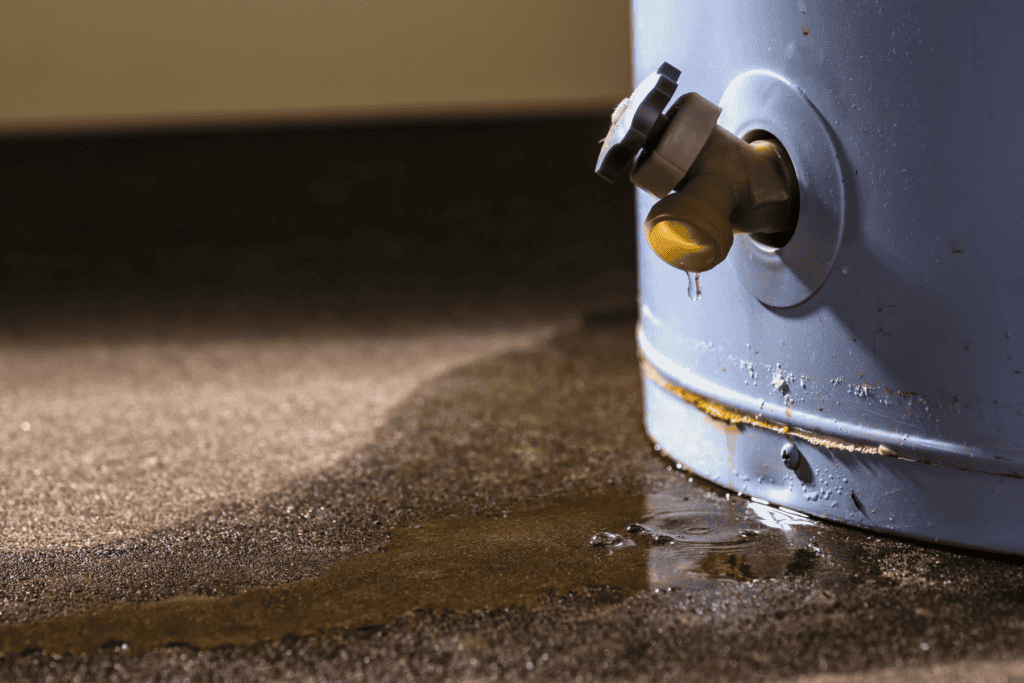
Finding puddles around your water heater can be alarming. However, a water heater leaking on your floor does not always require a total replacement. Water heater leaking issues range from minor valve drips to internal tank corrosion. Water often leaks from top fittings or valves before pooling on the floor. Spotting the leak early protects your home from costly water damage. Calling for professional Northern Virginia plumbing services helps keep your hot water system running safely.
Why Is My Water Heater Leaking?
Finding moisture around your appliance starts with tracing the water back to its actual source, since pooling near the base does not always mean the tank itself has failed. A water heater leaking can stem from several components, including loose plumbing connections, a worn drain valve, a faulty pressure relief valve, condensation, or corrosion inside the tank. Checking where the water first appears can help distinguish a minor repairable issue from a more serious problem that may require professional water heater replacement.
Loose Plumbing Connections
Cold water supply lines and hot water outlet pipes attach to the top of the tank. Thermal expansion and home vibrations can loosen these connections over time. Water dripping from top connections flows down the outer shell. It pools at the base and makes the tank look damaged.
Drain Valve Issues
The drain valve sits near the bottom of the tank. Technicians use it during routine flushing and maintenance. Plastic or brass drain valves leak if internal washers wear down. Sediment can also block the valve seal and cause continuous dripping.
Temperature and Pressure Relief Valve Problems
The temperature and pressure (T&P) relief valve is a critical safety feature. Standard T&P valves open to discharge water if internal tank pressure exceeds 150 PSI or temperatures reach 210°F. If water flows from the relief valve discharge pipe, the valve may be faulty. Excess system pressure can also trigger this discharge.
Thermal Expansion and High Pressure
Water expands as it heats inside a closed plumbing system. Without a functioning expansion tank, thermal expansion spikes internal tank pressure above safe thresholds. This force pushes water past rubber gaskets and safety valves.
Tank Condensation
Moisture under the unit is not always a structural leak. Cold incoming water entering a newly filled tank causes surface condensation. This occurs frequently during humid summers for homeowners using plumbing in Sterling, VA.
Why Is Water Leaking From the Bottom of My Water Heater?
When water pools around the base of your unit, finding the exact leak origin is essential. Water dripping from top valves can run down the side of the casing. However, active leaks from the bottom shell usually indicate internal failure.
Internal Tank Corrosion
Standard tank units feature a heavy steel vessel protected by an internal anode rod. Over time, minerals in hard water settle at the bottom of the tank. This sediment layer traps heat, destroys the protective lining, and causes rust. Once corrosion breaches the inner steel wall, a leaking water heater cannot be repaired.
Distinguishing Component Leaks From Tank Failure
Not every leak at the base means you need a new unit. A licensed plumber in Sterling, VA can inspect the system. If water comes from a loose drain valve or nipple fitting, replacing that part fixes the problem. However, if water seeps through the outer jacket seams from a corroded vessel, replacing the water heater is necessary.
An experienced technician evaluates the tank shell to recommend either a targeted repair or a replacement.
When Should I Call a Plumber for a Water Heater Leak?
Addressing moisture around your water heater quickly can help protect nearby flooring, drywall, insulation, and structural framing from water damage. Some leaks may come from a loose connection or replaceable valve, while others can signal internal tank corrosion or excessive pressure. Because the source is not always obvious, homeowners should watch for signs that indicate the problem requires immediate professional attention.
Contact a professional plumber right away if you notice these warning signs:
- Active pooling water that returns quickly after wiping.
- Brown or rusty water leaking from the base or hot water faucets.
- Loud popping or rumbling sounds coming from the tank during heating.
- Continuous dripping from the T&P valve discharge pipe designed for 150 PSI and 210°F thresholds.
- Visible rust, flaking metal, or bulging along outer tank seams.
These warning signs may point to sediment buildup, excessive system pressure, a failing safety valve, or deterioration inside the water heater tank. A licensed plumber can identify the exact source of the leak and determine whether a targeted repair is appropriate or whether replacement is the safer long-term solution. Prompt service can also reduce the risk of extensive water damage and an unexpected loss of hot water.
Immediate Safety Steps for Homeowners
While waiting for a technician, homeowners can take several basic precautions to reduce water damage and limit potential safety risks. Perform these steps only when the area is dry and the shutoff controls are easy to reach. Never enter standing water or handle electrical components when moisture is present near the unit.
- Shut off the main cold water valve on the supply pipe above the unit.
- Turn off the power supply. For electric units, turn off the dedicated circuit breaker inside your panel. For gas units, turn the gas valve to OFF.
- Stay clear of standing water near electrical lines or connections.
After securing the water and energy supply, avoid attempting to open the tank, tighten unfamiliar fittings, or repair damaged valves yourself. Never cap a temperature and pressure relief valve or apply sealant to a leaking tank, as these actions can create additional safety hazards. A trained plumber should inspect the system and complete any necessary water heater repair or replacement.
Protect Your Home From Water Heater Damage
A water heater leaking in your home requires fast attention to prevent major structural damage. Leaks can start from loose pipe fittings, bad valves, or severe internal rust. Spotting the exact source helps you choose between a quick component fix or a full tank replacement. Taking simple safety steps and getting a professional evaluation keeps your home dry and safe.
Schedule Professional Water Heater Repair Today
If you have a water heater leaking in your home, contact John Nugent & Sons for reliable repairs. Serving local homeowners across Northern Virginia since 1975, our family-owned business offers tankless and tank water heater services, along with comprehensive plumbing services. We also deliver complete electrical repair services in Northern Virginia to protect your entire home. Contact us today or schedule your service online for prompt assistance.