
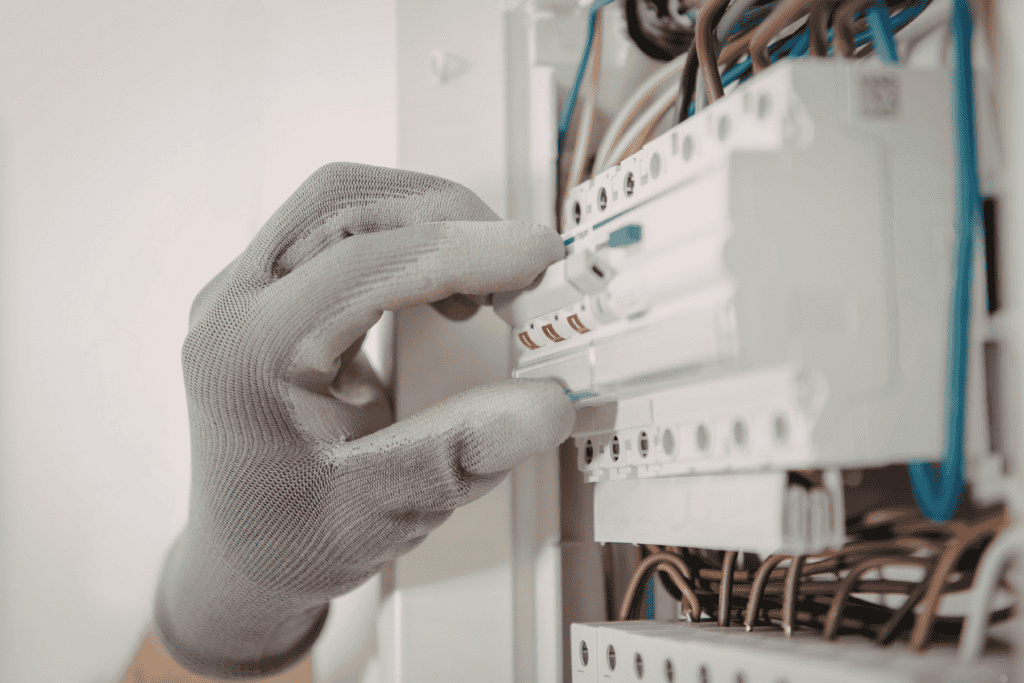
When a switch flips in your electrical panel and cuts power, it is easy to view it as a minor hassle. However, circuit breakers serve as the primary safety barrier in your home. According to the National Fire Protection Association, U.S. fire departments responded to an estimated annual average of 46,652 home electrical structure fires from 2020 through 2024. Circuit breakers help protect electrical systems by interrupting the flow of electricity when a circuit experiences an unsafe overload.1 This prevents wire insulation from melting and reduces fire risks. If your circuit breaker keeps tripping, your electrical panel is signaling a safety problem that requires attention.
Understanding why a breaker trips helps you distinguish between a simple appliance overload and a dangerous wiring fault. Taking proper precautions protects your appliances and your home’s electrical grid. For thorough system evaluations and electrical repair services in Northern Virginia, local homeowners rely on trained technicians to maintain safe power delivery.
Why Your Circuit Breaker Keeps Tripping and What Risks It Poses
A breaker that trips occasionally during heavy power use is doing its job. However, when your circuit breaker keeps tripping repeatedly, you face a serious warning sign. Ignoring repeated trips or forcing a breaker to stay on can overheat internal wiring. Overheated wires melt insulation and create arc hazards inside wall cavities.
The National Electrical Code (NEC) sets strict limits on continuous electrical loads. Under NEC Section 210.19 guidelines, continuous household loads should not exceed 80% of a circuit’s maximum rated capacity. When power demands exceed those limits, safety devices trip to prevent severe equipment damage.
Common Causes of Frequent Breaker Trips
Identifying the cause of intermittent power loss requires evaluating how electricity moves through your circuits. Common causes include:
- Overloaded Circuits: Running high-wattage space heaters or hair dryers on one circuit exceeds safe amperage limits.
- Short Circuits: Hot wires touching neutral wires create sudden current surges that instantly trip breakers.
- Ground Faults: Unintended contact between hot wires and grounded metal boxes diverts current along unsafe paths.
- Faulty Appliances: Internal component failures or damaged appliance cords can pull excess current during operation.
- Moisture Accumulation: Water inside outdoor or garage receptacles creates electrical tracking and trips breakers.
- Aging Breakers: Over time, internal springs lose tension. Worn breakers trip under normal household loads.
- Electrical Panel Damage: Corroded bus bars or loose panel connections cause unsafe voltage fluctuations.
Understanding these factors helps homeowners determine when they need professional electrical repair in Northern Virginia to resolve panel issues.
How to Safely Troubleshoot and Reset a Tripped Breaker
Restoring power requires a methodical approach to protect yourself and your equipment from arc flash hazards. Follow these steps to address a simple overload:
First, unplug or turn off devices on the affected line. Reducing electrical demand before resetting prevents sudden power surges.
Second, open your main electrical panel door. Do not remove the protective dead-front cover. Locate the breaker handle resting between the “ON” and “OFF” positions. Tripped handles often show a red or orange indicator window.
Third, reset the switch using proper technique. Move the handle firmly to the “OFF” position until it clicks. National Electrical Manufacturers Association (NEMA) guidelines specify this full “OFF” step to reset internal spring mechanisms. Next, push the handle back to “ON”. Power should return to the area.
If you suspect a specific appliance caused the trip, reconnect items one by one. If plugging in a device cuts power immediately, that unit requires repair.
Why a Circuit Breaker Won’t Reset
When a breaker snaps back to “OFF” immediately, do not force the handle. Forcing a handle overrides built-in safety mechanisms. It can trigger rapid conductor heating, electrical arcs, or fire behind wall drywall.
A breaker that refuses to reset indicates an active ground fault or short circuit. Leave the switch in the “OFF” position. Contact a licensed electrician to perform a safety evaluation and detailed diagnostic inspection.
Recognizing Panel Degradation and Choosing Repair Options
While load balancing resolves simple overloads, frequent trips often stem from panel degradation. Consumer Product Safety Commission (CPSC) studies note that residential electrical panels have an average service life of 30 to 40 years. As panels age, internal copper bus bars corrode, and breaker mechanisms lose mechanical spring tension. Older panels also lack capacity for modern electronics, vehicle chargers, and HVAC in Northern Virginia.
Homeowners should inspect their panel area for distinct warning signs:
- Burning odors or acrid smells near receptacles or panel doors
- Char marks, rust, or melted plastic on breaker switches
- Buzzing, humming, or clicking sounds from the panel enclosure
- Breaker handles that feel hot to the touch
- Switches that trip instantly upon restoration
These warning signs may indicate loose connections, damaged breakers, corrosion, overheating, or broader electrical panel failure. Homeowners should avoid removing the panel cover or attempting internal repairs, since exposed components can remain energized even when the main breaker is off. A licensed electrician can inspect the system, determine whether a targeted breaker repair is sufficient, and recommend a full panel upgrade when it’s the safer long-term solution.
Evaluating Repair vs. Replacement Options
When addressing panel problems, homeowners must weigh repair against full replacement. Replacing an individual faulty breaker is cost-effective for localized failures in modern panels. However, widespread bus bar corrosion or panels over 30 years old require complete panel upgrades to meet current NEC safety codes.
Choosing the right service provider involves objective criteria:
- Verify active state licensing and electrical contractor certifications.
- Ensure the technician pulls required municipal permits for panel work.
- Look for established local companies with proven safety records and transparent policies.
- Avoid unlicensed handymen for panel work, as improper installation voids home insurance coverage.
Property owners in Sterling, VA can evaluate their panel capacity with certified technicians who perform thorough safety audits. For trusted advice on system upgrades, homeowners turn to reliable electrical services in Sterling, VA to ensure long-term code compliance.
Resolving Persistent Circuit Breaker Issues
A circuit breaker serves as your primary defense against electrical hazards. While occasional overloads are easy to manage by redistributing appliances, frequent tripping signals serious internal faults. Short circuits, ground faults, and aging components require prompt professional intervention to protect your property.
Repeatedly resetting stubborn breakers compromises home safety and increases fire risks. Working with an established Northern Virginia electrical company ensures your panel meets modern NEC requirements and keeps power flowing safely.
Schedule Professional Electrical Services Today
If your circuit breaker keeps tripping or refuses to reset, prioritize your safety. John Nugent & Sons has delivered trusted electrical, heating, and cooling services to homeowners since 1975. Our licensed electricians provide thorough diagnostics, same-day service, and upfront pricing to resolve your power issues quickly.
Whether you need panel troubleshooting, breaker replacement, or system upgrades, our team in Sterling, VA is ready to assist. Contact John Nugent & Sons today or request service online to ensure your home remains safe and powered.
Source
-
- McGree, T. (2026, April 30). Home fires caused by electrical failure or malfunction. National Fire Protection Association.