
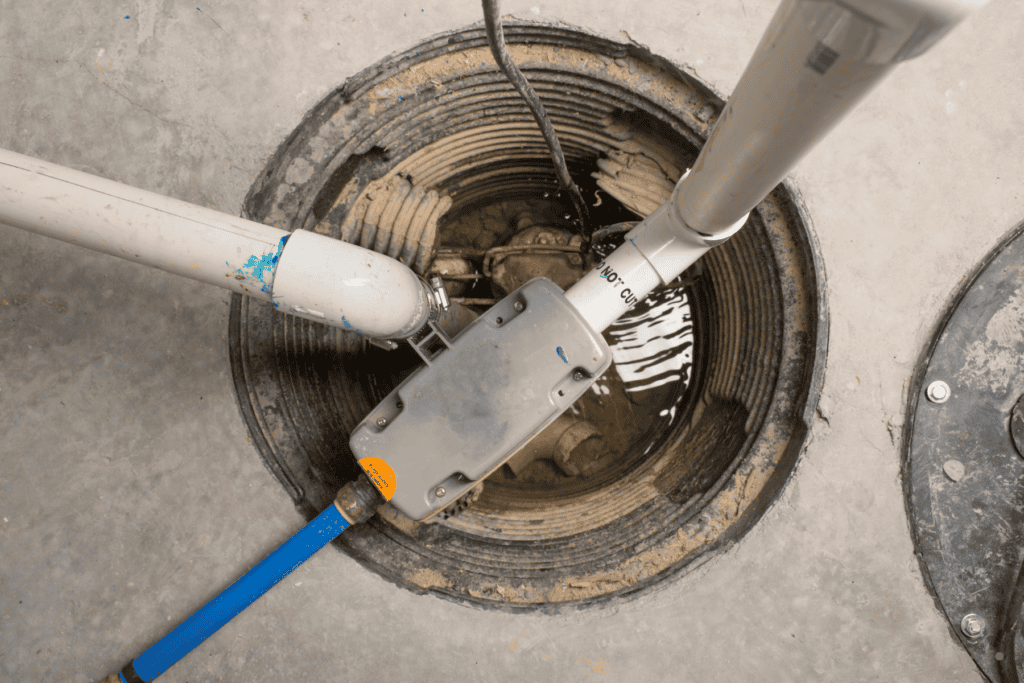
A malfunctioning drainage system leaves your basement vulnerable to water damage during heavy rainstorms. Finding your sump pump not working right before a storm requires quick, safe action to protect your home. Understanding basic pump operation helps you spot small problems before flooding happens. This guide covers common causes of equipment failure, simple troubleshooting steps, and when to call for sump pump repair.
What Is a Sump Pump?
A sump pump sits in a basin, or pit, at the lowest point of your basement or crawl space. Its main job is to collect groundwater from foundation drains and pump it away from your foundation. Managing groundwater prevents damp walls, foundation cracks, and basement flooding.
Homeowners generally choose between two primary pump types: submersible pumps and pedestal pumps. Submersible pumps operate inside the pit, submerged in water. Their cast iron or stainless steel housings muffle motor noise and dissipate heat efficiently during long run cycles. Pedestal pumps position the motor above the sump pit on a column. They cost less and offer easier access for servicing, but their thermoplastic parts make them louder and less durable under heavy loads.
Standard residential units feature 1/3 horsepower (HP) or 1/2 HP motors. A typical 1/3 HP pump moves about 2,000 to 3,000 gallons per hour (GPH) at a 10-foot vertical lift. Larger 1/2 HP units move up to 4,200 GPH for homes with high water tables. Since 1975, John Nugent & Sons has provided reliable Northern Virginia plumbing services to help homeowners maintain proper basement drainage.
How Does a Sump Pump Work?
Groundwater accumulates around your foundation and flows into the sump pit through perimeter drain tiles. As the water level rises in the pit, it lifts a float switch. This mechanical float acts as an automatic switch.
When the water reaches a set level, the float switch turns on the motor. The motor spins an internal impeller. This impeller creates centrifugal force to push water through a rigid PVC discharge pipe. A check valve in the discharge line prevents water from flowing backward when the motor stops. Once the pit empties, the float drops, signaling the motor to turn off.
Troubleshooting a Sump Pump Not Working
When heavy rain falls, finding your sump pump not working can cause immediate concern. Knowing where mechanical or electrical faults happen helps you decide whether to perform a basic check or request expert help.
Common Causes of Sump Pump Failure
Electrical interruptions account for a large portion of pump failures. Under National Electrical Code (NEC) standards, sump pumps require a dedicated Ground Fault Circuit Interrupter (GFCI) outlet on a 15-amp or 20-amp circuit. Severe storms can trip GFCI outlets or main circuit breakers. If your outlet loses power, you may need professional electrical repair services in Northern Virginia to restore circuit safety.
Mechanical issues inside the pit also disrupt operation. Float switches can snag against the basin wall or get tangled in power cords. Debris, such as gravel or silt, can clog the intake screen or jam the impeller. Additionally, discharge pipes can freeze during winter or become clogged with outdoor debris. An undersized unit can overheat when incoming flow exceeds motor capacity. Finally, age and component wear lead to motor failure.
Safe Troubleshooting Steps for Homeowners
Homeowners can safely evaluate several basic sump pump problems by following a few clear troubleshooting criteria and checking the system’s power source, float switch, operation, and discharge line before calling a professional.
-
- Check Power Supply: Verify that the pump is plugged securely into a working GFCI outlet. Press the outlet reset button if tripped.
-
- Inspect the Float Switch: Look into the pit to ensure the float moves freely up and down without touching the wall.
-
- Test Pump Operation: Slowly pour 5 gallons of water into the sump pit. The float should rise and automatically start the pump within seconds.
-
- Inspect Discharge Line: Check the exterior outlet pipe for ice, mud, or debris blockages. Ensure the check valve points in the correct direction.
Always follow safety precautions near water. Never handle electrical cords while standing in water or touch internal motor components. If your basement has standing water near electrical outlets, contact a qualified plumber in Sterling, VA immediately.
Warning Signs of Equipment Breakdown
A failing sump pump may still run intermittently, making early warning signs easy to overlook. Changes in sound, cycling behavior, water levels, or electrical odors can indicate that the pump is struggling, obstructed, or nearing the end of its service life. If your sump pump is not working properly, watch for these common signs:
-
- Continuous grinding, rattling, or squealing noises from the motor bearings
-
- Pump running constantly even when the pit contains no water
-
- Sump pit overflowing with water while the motor remains silent
-
- Rapid cycling on and off every few seconds
-
- Visible rust on pump housing or burning electrical odors
These symptoms may point to a stuck float switch, clogged discharge line, worn motor, electrical problem, or incorrectly sized pump. Shut off the system and contact a qualified plumber if you notice burning odors, standing water near electrical components, or repeated pump failure. A professional inspection can determine whether sump pump repair services are sufficient or whether sump pump replacement is the safer option.
Repair vs. Replacement Considerations
Deciding whether to repair or replace your unit depends on equipment age, motor condition, and repair costs. Minor problems like cleared intake clogs or reset breakers are straightforward repairs. However, primary pumps have an average lifespan of 7 to 10 years according to industry standards. If your pump exceeds this age or suffers a burned motor winding, full unit replacement provides better protection.
When replacing equipment, evaluate both pump material and backup options. Heavy-duty cast iron pumps handle continuous heat better than plastic units, extending operational life. Installing a secondary battery-backup pump alongside your main pump adds extra security. Battery systems automatically take over during power outages, pumping up to 1,500 GPH for several hours.
A professional technician can evaluate your basement drainage setup and verify electrical panel capacity. Arranging expert plumbing ensures correct installation, proper check valve placement, and full code compliance. Technicians can also inspect your electrical system for dedicated electrical services in Sterling, VA.
Maintaining Basement Flood Protection
A reliable sump pump protects your foundation from groundwater buildup and expensive structural water damage. Regular visual checks, annual pit cleaning, and float testing help maintain pump reliability. When simple homeowner checks do not resolve issues with a sump pump not working, scheduling a professional sump pump inspection ensures your basement remains dry during severe storm events.
Schedule Professional Sump Pump Service Today
If your sump pump is broken, making grinding noises, or failing to remove water, address the issue before the next storm. The licensed technicians at John Nugent & Sons deliver complete sump pump maintenance, repair, and installation across Northern Virginia. Call us today to schedule your service.